Manchester City Scandal: The UAE and Sportswashing
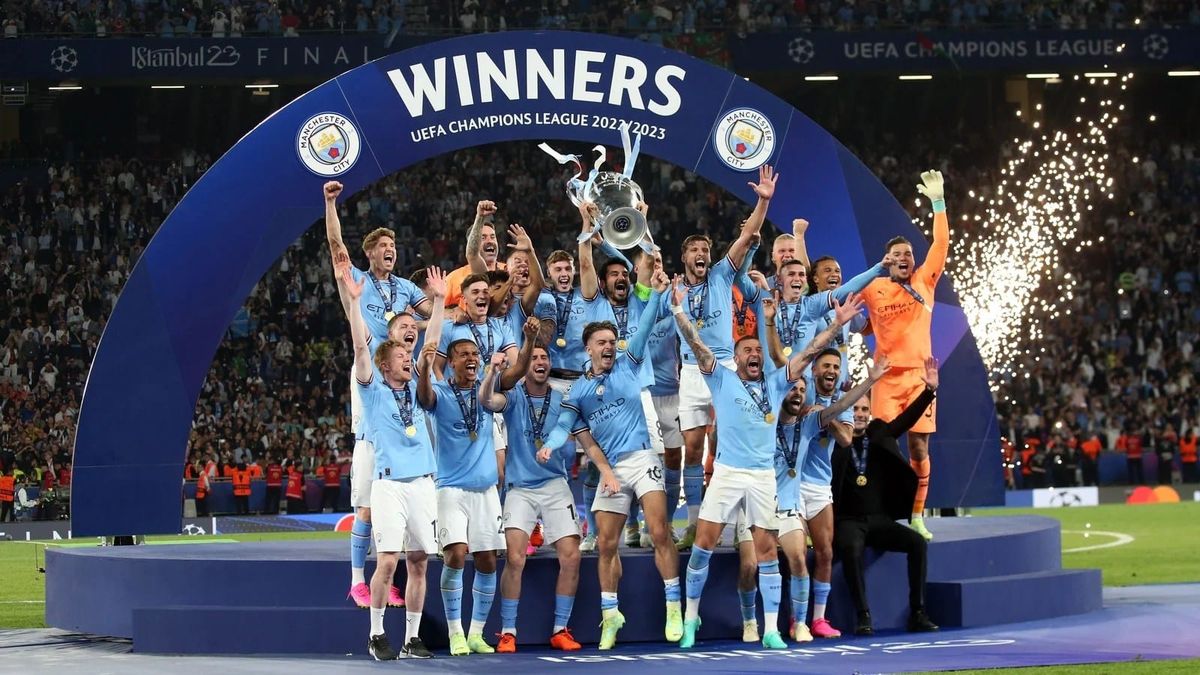
Manchester City is one of the richest football clubs in the world: the Abu Dhabi United Group, controlled by Sheikh Mansour bin Zayed Al Nahyan, a member of the ruling royal family of the United Arab Emirates (UAE), owns a majority stake. The club has won numerous trophies in recent years, including eight English Premier League titles. But it turns out that they have been cheating their way to success.
The Premier League has instituted Financial Fair Play rules that aim to limit a club’s spending to its income, preventing a wealthy owner from simply pumping money into the team. The rules do not create a level playing field, as already rich and successful clubs will always have the most income (from ticket and merchandise sales, from prize money and from sponsorship deals).
But the rules, if properly implemented, would at least mitigate inequality.
Manchester City drove a coach and horses through them. An independent commission has found that the Abu Dhabi United Group gave money to UAE companies ostensibly sponsoring the club, thus disguising the owners’ (illegitimate) subsidies as (legitimate) sponsorship income.
These constituted what the commission calls “sham contracts” and, alongside other secretive financial engineering, amounted to over £900 million in illegal funding going into the club between 2009 and 2018.
Fans of rival clubs are indignant and are demanding harsh punishment, which could consist of fines, points deductions, relegation to lower divisions and even the retrospective loss of some of those league titles. But why should anyone outside the world of football care?
After all, the beneficiaries of any penalties will be other rich clubs, many of them owned or sponsored by equally dodgy entities and individuals, including US oligarchs and other authoritarian regimes.
Is this even the worst thing happening in and around football? I have written here before about the outrageous behaviour of world football’s governing body, FIFA, and its president Gianni Infantino, including his joining Trump’s obscene Board of Peace for Gaza as part of his obsequious boosterism of the US president.
Support for Israel is also evident across many English Premier League clubs, not least Manchester City itself, whose chairman, Khaldoon Al Mubarak, sits alongside Infantino on that Gaza board. Among the club’s sponsors is the website construction company Wix, founded by a former member of Israeli military intelligence, which fired a Dublin-based employee for calling Israel a “terrorist state” on social media.
Recently we have seen the refusal of the Irish government or the Football Association of Ireland (FAI) to stop the matches between Ireland and Israel.
Politically speaking, one team, Manchester City in this case, engaging in ‘financial doping’ to gain an unfair advantage over others seems like pretty small beer by comparison.
Sportswashing
But there are reasons for the wider public to take an interest in this issue. In the first place, UAE ownership of Manchester City constitutes a classic example of sportswashing; as Miguel Delaney puts it in his book States of Play, “association with something so popular brings influence and legitimacy.”
It is a case of using the prestige and good publicity from sporting success as a tool to divert attention from the less savoury features of a regime.
And the UAE regime is deeply unsavoury, as documented in the most recent Amnesty International report on the country. Human rights defenders are arrested and convicted in mass, unfair trials.
Others suffer enforced disappearances and arbitrary detention. The kafala employment system opens migrant workers to thoroughgoing abuse, including wage theft, long hours working in often dangerous working conditions, evictions, and debts arising from recruitment ‘fees’.
To this list may be added the crimes against the environment that arise from being a major producer of oil and gas. The Emirati royal family also colludes with the Trump mafia in corrupt business practices, such as a $500 million investment in the Trump family’s cryptocurrency scam.
The attempt to whitewash these abuses by claiming credit for the creation of sporting greatness in Manchester is now irredeemably banjaxed. Instead, the Manchester City ownership has become not only widely reviled but (and this may be what despots fear most) the subject of ridicule — they could not even cover their tracks successfully.
Further derision has been invited by the ownership’s claim to have “irrefutable evidence” of their innocence, evidence that they somehow failed to supply to the commission investigating them.
Manchester’s Partner
A second reason why this affair is of interest to an audience beyond football is the way in which it shines a light on links between overseas state capital and political governance in the UK (and probably elsewhere also) . Researchers at Sheffield University have looked at the activities of the Manchester Life partnership between Manchester City Council and the Abu Dhabi United Group (the latter being the majority partner).
Between 2014 and 2022, this partnership oversaw the construction of 1,468 homes in Manchester’s gentrifying Ancoats district — 73% for private rental, the remainder for private sale. This was not affordable housing for those who need it most.
The Abu Dhabi United Group channels all of its assets and income through opaque Jersey-registered subsidiaries. (Jersey is a notorious tax haven).
How profits are shared out between the council and the Abu Dhabi United Group is not publicly disclosed. The researchers concluded that “this looks like a bad deal for the council and its citizens”.
Current UK Prime Minister Andy Burnham, who was the Mayor of Greater Manchester between 2017 and 2026, has said he would be “really concerned” if the Emiratis sold the football club and that “They’ve been… a huge partner in the building of modern Manchester”. But who benefited from that building? And what role did Burnham himself play in all this?
The Abu Dhabi United Group leveraged their ownership of Manchester City not only for sportswashing purposes but also as a bridgehead into (presumably) profitable business ventures in the region. That business is now under threat, and not just in Manchester — a multi-billion-pound UAE investment into a Silicon Valley-style technological hub in Oxford and Cambridge may also be abandoned as the Emiratis threaten economic retaliation for any penalties imposed on Manchester City.
Sudan
Thirdly, and finally, what seems at first glance to be a mere footballing scandal also raises issues of how powers like the UAE access the wealth that they lavish on sporting projects. One of those ways is by plundering Sudan.
The latest phase of war in Sudan has left up to one hundred and fifty thousand dead and fourteen million, a quarter of the population, displaced (with over four million seeking inadequate refuge in neighbouring countries). Thirty million people were in need of humanitarian assistance last year, including sixteen million children.
The UAE is the major supporter of one of the two main groups waging this civil war, the Rapid Support Forces (RSF). The UAE supplies this murderous militia, guilty of multiple atrocities, with weapons, money and political support in exchange for looted Sudanese gold, and with a view to acquiring potentially lucrative agricultural land as well as a port on the Red Sea.
An independent UN fact-finding mission on the RSF siege of El Fasher, capital of the Sudanese Darfur region, found that the RSF “committed myriad crimes against humanity, including murder, torture, enslavement, rape, sexual slavery, sexual violence, forced displacement and persecution on ethnic, gender and political grounds”. The UAE, indiscriminate in its sponsorship of mayhem, also acquires gold from the RSF’s main rival, the official Sudanese army.
As Sudan specialist Joshua Craze notes, “Emirati petrodollars grease the wheels of business networks: every country in its sphere of influence benefits from the gold leaving Sudan, almost all of which flows to the UAE.” One can add Manchester City to the list of beneficiaries.
The extravagant transfer fees and wages illegally lavished on the star players of the club were partly funded by gold stolen from Sudan, the theft paid for in blood and misery by the Sudanese people.
Trivial Pursuits
Football, in itself, is a trivial pursuit. But the level of attention it commands, and the profile enjoyed by the top players, mean that it can be harnessed for progressive political ends — for example, when fans reject blood-stained sponsorship deals or when players raise banners on behalf of human rights.
It also provides an avenue for education on the workings of modern capitalism.
The case of Manchester City acts as a teaching tool on how autocratic states seek to whitewash their images and legitimise their rule, on how overseas capital embeds itself within host countries’ governance, and on how Africa’s resources are plundered to fund the greed and egos of those who exploit the continent. It may only be a game, but there is a lot to learn from studying how it works.