The World Is Not Finished
There is something almost comical about being told, repeatedly, that history has ended.
Capitalism has won. Democracy is in crisis.
Fascism is back. The planet is burning.
Artificial intelligence is coming for our jobs, our art, and possibly our remaining capacity to distinguish a human being from a customer-service chatbot. Somewhere, an exceptionally well-funded consultant is preparing a PowerPoint explaining why all this represents an exciting opportunity for innovation.
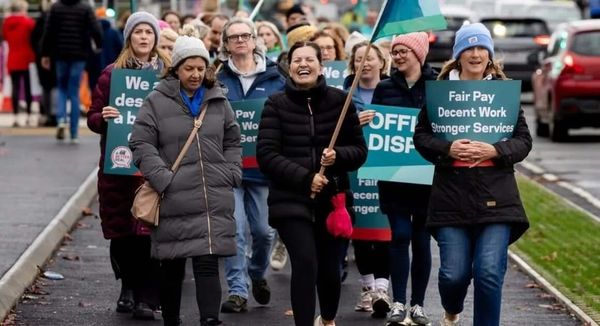
And yet, people keep turning up in the streets. They march, strike, occupy universities, and refuse to disappear quietly into a world supposedly bereft of alternatives.
From Serbia to Nepal and Kenya, young organisers have turned local grievances into national demands for accountability. Their methods differ, but each challenges the idea that the present is the only possible arrangement of human existence.
Not because every protest is revolutionary. Fascists protest, too.
Some have turned shouting at governments into an entire political philosophy. But because protest, at its most compelling, reminds us of something authoritarianism and neoliberal capitalism desperately want us to forget: The world is unfinished.
France offers a particularly vivid reminder. The strikes and student occupations of May 1968 transformed streets, factories and universities into laboratories of political possibility.
Jean-Luc Godard joined filmmakers contesting the Cannes Film Festival, which ended early; Chris Marker’s SLON collective helped make the short, collectively produced ciné-tracts that carried images of the revolt beyond conventional cinema. The camera, too, could join a picket line.
More recently, France’s September 2025 “Block Everything” mobilisation involved hundreds of actions against austerity and deteriorating public services; by October 2026, student protests had converged with workers’ demands over wages and living costs.
Capitalist Realism
One of neoliberalism’s greatest achievements has been convincing people that the institutions governing their lives are simultaneously disastrous and inevitable. Unaffordable housing?
That’s the market. Collapsing healthcare?
Structural constraints. Universities transformed into degree-producing corporations?
Financial sustainability. Precarious employment and unpaid labour?
Perhaps you need a growth mindset. Mark Fisher called this capitalist realism: the peculiar condition in which imagining the end of the world becomes easier than imagining the end of capitalism.
Resistance, however, can become trapped within the arrangements it opposes. Movements may denounce domination yet reproduce exclusion in their own organisations.
The test is not how loudly we oppose the present, but what possibilities our actions create.
This is not an argument against repetition. Sometimes we must march, strike, commemorate, and tell the same histories repeatedly because power depends upon our exhaustion. The question is what our repetitions produce.
Do they deepen our capacity to act together? Fascism, after all, is obsessed with renewal: national rebirth, cultural restoration, civilisational greatness. Its supposed future is often a return to an invented past.
Yet its imagined future is remarkably impoverished. It is almost always a return.
Back to when the nation was pure, men were sufficiently masculine, women knew their place, and nobody had committed the terrible offence of suggesting that other people might possess rights. Naturally, this glorious past rarely existed.
That is the convenience of political nostalgia: the dead are seldom available to correct the record. Erich Fromm understood something important about authoritarian desire.
In Escape from Freedom, he examined how powerlessness can become attached to domination.
Fromm understood how feelings of powerlessness can become attached to domination: the person who feels diminished may seek someone else to diminish. Yet the freedom of others need not be a personal injury.
Liberation requires something more imaginative than simply reversing who occupies the top of a hierarchy.
Defeating domination and reproducing domination are not the same political project.
Memory
Authoritarianism is also a politics of memory. It determines which deaths matter, which histories deserve commemoration, and which atrocities become unfortunate misunderstandings.
Sometimes this involves censorship. More often, textbook revisions, institutional silences, selective anniversaries, and the conversion of political violence into administrative trivia.
A massacre becomes an incident. A disappearance becomes a security matter.
A preventable death becomes a procedural failure.
History is not necessarily erased. It is made increasingly difficult to recognise.
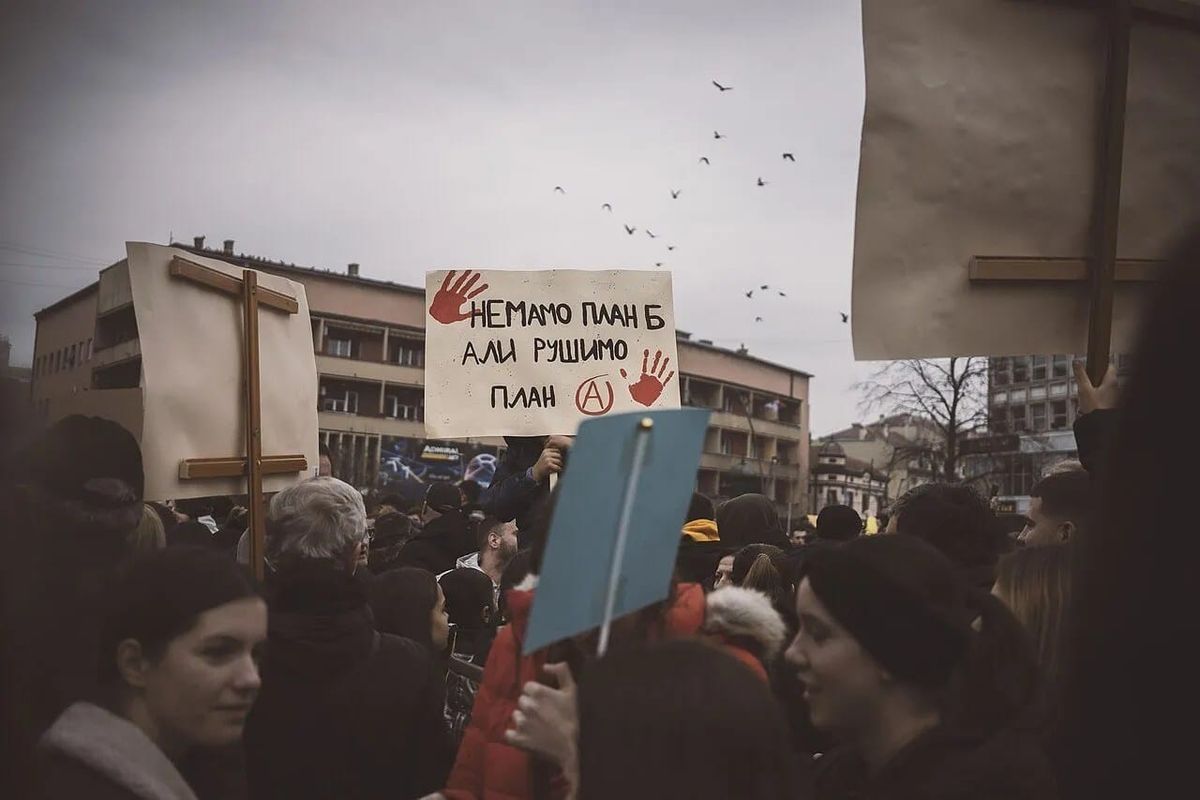
In Serbia, the November 2024 collapse of a railway-station canopy in Novi Sad killed sixteen people and ignited sustained student-led protests. Students demanded the publication of reconstruction documents, accountability for attacks on protesters, and greater funding for higher education.
The movement spread through university blockades, marches and assemblies across the country.
Students organised through decentralised structures while residents supplied meals, mattresses and support. By October 2026, the movement had moved from campus occupations towards an electoral challenge, fielding a list of 250 candidates in the parliamentary election.
Mourning became organisation, and organisation became a possible route to institutional change. Walter Benjamin warned against histories that celebrate the powerful while forgetting those crushed beneath the procession of progress.
Memory can also be weaponised, but in Serbia the demand to remember was tied to specific questions: who authorised the works, who was accountable, and what public institutions owed the dead and the living. We remember not to remain imprisoned by the past, but to prevent the past from governing us unchallenged.
Revolt across continents
Across Europe, the demands are concrete. In Albania, October 2026 student-led demonstrations in Tirana challenged corruption, inadequate education funding and limited job prospects; clashes with police followed.
In Spain, the eviction of an elderly Madrid tenant helped catalyse mass housing protests and an encampment in Puerta del Sol, where protesters established a kitchen, medical support and meeting spaces. These were not simply symbolic occupations: people were organising the infrastructure of a different everyday life.
Consider what happens when people occupy a street. Ordinarily organised around traffic, commerce, surveillance, and commuting, it suddenly becomes something else.
A meeting place. A classroom.
A kitchen. A space for mourning, disagreement, solidarity, and occasionally some truly dreadful collective singing.
The street changes because relationships within it change. In Kenya, youth-led demonstrations against the 2024 Finance Bill spread from online organising to nationwide marches.
After deadly clashes, President William Ruto announced that he would not sign the bill. The protesters had forced a concrete policy reversal, even as wider demands for accountability remained unresolved.
In Italy, trade unions and dockworkers turned solidarity with Palestinians into industrial action. During the October 2025 protests over the interception of the Gaza aid flotilla, strikes disrupted transport, students occupied university spaces, and workers blockaded port access.
Protest moved between the street, the classroom and the workplace, linking international solidarity to the material movement of goods.
In Nepal, a September 2025 ban on major social-media platforms triggered youth-led protests fuelled by anger over corruption and scarce opportunities. Security forces killed at least nineteen people on the first day; the ban was lifted, and Prime Minister K. P. Sharma Oli resigned.
These outcomes came at a grave human cost and did not settle the question of democratic reform. Yet they show how people can convert digital networks and public assembly into political pressure.
The most interesting thing about protest may be not only what it demands, but what participants discover they can do together.
In India, October 2026 demonstrations over the revision of electoral rolls brought students, farmers and civil-society groups into the streets, with protesters warning of disenfranchisement and police detaining demonstrators in Delhi. In Brazil, tens of thousands protested in September 2025 against legislative efforts to shield former president Jair Bolsonaro and lawmakers from legal accountability.
Musicians and cultural workers joined the mobilisations: another reminder that political memory has a soundtrack, not just a slogan.
Hope
There is something profoundly unserious about insisting people remain cheerful while political institutions collapse and ordinary life becomes increasingly precarious. Hope is not the belief that everything will be fine.
Ernst Bloch understood hope through possibilities not yet realised. Paulo Freire understood it through the practice of transforming oppressive conditions.
Hope is not a prediction. It is a refusal to grant the present a monopoly over the future.
We need the courage to refuse. And the imagination to create.
Political imagination loves dramatic moments: The barricade. The uprising.
The occupation. The triumphant photograph of a crowd in a public square.
But revolutions also require food. Someone must prepare it, care for children, tend to the injured, translate, resolve conflicts, and ensure that invisible labour does not become another casualty of collective liberation.
Feminist thought reminds us that care is not an embarrassing domestic detail to address after the revolution. It is part of the material organisation of life.
The material work of solidarity is visible in Serbia, where neighbours brought food and bedding to student occupiers. Such acts do not replace demands for institutional change; they help sustain the people making them.
A movement’s democratic promise is measured partly by how it shares responsibility and care. Care is not compulsory forgiveness or moral purity.
It is the practical work of sustaining collective life: food, shelter, translation, accountability and the capacity to disagree without making another person disposable.
In John Steinbeck’s East of Eden, the interpretation of the Hebrew word timshel offers an extraordinary ethical possibility: thou mayest.
Not thou shalt.
Not thou must.
Thou mayest.
We are neither guaranteed redemption nor condemned to reproduce inherited violence.
There is room, however constrained, for becoming otherwise. Of course, nobody simply chooses their way out of colonialism, poverty, patriarchy, or fascism.
Freedom requires material conditions, institutions, solidarity, and collective transformation.
At its best, protest enlarges the conditions under which people can act differently. It restores histories that would have otherwise been buried elsewhere and creates relationships existing institutions have rendered unimaginable.
Anger is necessary. Refusal is necessary. Some institutions deserve dismantling.
But destruction alone is not a political horizon. We need to develop a political consciousness that promotes a revolutionary change and is not diverted by a fake left rhetoric that seeks to channel our grievances into safer channels.
If we wish to defeat authoritarianism, we must do more than identify authoritarians. If we wish to resist fascism, we must do more than perfect the language of anti-fascism.
We must practise relationships that make another world possible. And so, we may return to the streets.
To students who refuse to forget. Workers who reject disposability.
People organising kitchens, classrooms, assemblies, and networks of care amid political catastrophe. Their actions cannot guarantee a better future.
But they contest the proposition that no better future can exist. Perhaps that is where hope begins. Not with certainty that we will win.
But with the stubborn recognition that history is unfinished. The world is not finished.
And neither are we.
Image: Dejan Krsmanovic, Protests in Serbia regarding the fall of a concrete canopy, via Wikimedia Commons (CC BY 2.0).