Why Public Sector Workers Are Right to Strike
It’s an old adage but how do you know a government Minister is lying – their lips are moving! And so it is with Jack Chambers and Micheál Martin – both of whom are trying to justify the ongoing arrogance and ineptitude of this government.
Government Lies
Chambers thinks there isn’t a basis for the 300,000 public sector workers to take strike action. Martin says the strikes are unwarranted. They both claim to not understand why the unions are organising this action, invoking their best impressions of an innocent bystander.
They claim they are open to negotiations and have officials ready to go if only the unions would agree and stop putting pre-conditions.
Union leaders have called out this position saying the government is not serious about negotiations as they waited until the middle of June two weeks before the end of a 30-month pay deal to even contact the unions.
Then the government entered the room and started demanding discussions on efficiency reforms and restructuring across the public services, before they were willing to talk about pay. See, despite all their spin, it was the government that put the pre-conditions on the negotiations.
The union leaders, reflecting the anger of their members over the cost of living crisis, stated they wanted to sort out pay first, with a commitment from the government that they understood the cost of living pressure and an appropriate pay deal was on the cards.
Chambers and his officials refused to give such a commitment!
The Whole Story
Now if that was the whole story, you could argue that calling out hundreds of thousands of workers on strike is a bit of an over-reaction. Of course, there’s much more to the disingenuous dealings of the government:
- First, under the previous pay deals public sector workers have suffered real terms pay cuts. FORSA estimate that their members have lost 5% of their pay against inflation since 2022;
- Second, the much vaunted €1.2 billion in the budget is estimated to fall below the actual inflation rate for next year, with no prospect of catching up with previous lost pay;
- Third, the sneaky government keep talking about the €1.2 billion in next year’s budget but the pay deal ran out in June – what about a deal for the second half of 2026?
- Fourth, and this is a doozy, some of the pay elements from the last deal – the one that ran out in June – are still outstanding! Yes, you read that right, the government hasn’t even honoured the last pay deal, with a pay rise set aside for local bargaining not implemented.
So is it any wonder that public sector workers are not just angry over the cost of living crisis – they also don’t trust their employer the government.
As an aside the so-called “workers’ budget” gave virtually nothing to 500,000 low paid workers who do not get paid enough to benefit from the higher rate tax band being moved.
How To Win
This all raises the question of how the strikes can win. We know the government will use every tactic available to keep the public sector workers and their unions under control, limit the strike action and get away with selling a crappy pay deal.
Here the role of trade union leaders is also important to understand. Union leaders play a contradictory role between their members and the employers. They have to represent their members’ interests to remain relevant – so they are pushing this campaign over pay. However, they also see their role as negotiating settlements between their members and the employers.
This means that often strike action is seen as a way of forcing the employers to the negotiating table, rather than a strategy to beat back the employers.
We can see all of this clearly in the school secretaries and caretakers dispute from last year. The action called by the union was for indefinite strike action. This is important because as powerful as a mass 24-hour strike is, by definition it is a time-limited show of strength. If you’re an employer, you look at 24-hour strikes and think we can ride this out.
Indefinite strikes on the other hand raise the sharpness of the action quickly. So when 2,500 school secretaries and caretakers went on strike for a week, school principals were warning of closures if the strike was not called off in a matter of days.
Here we see the huge power of just a small number of organised workers. (And it’s already happening this time round – the Dáil and universities are being forced to close on the upcoming strike days.)
It was at this point that the union leadership stepped in and called off the strike on the basis of some weak commitments from government to address their pension rights. Fast-forward a year later and a tortuous negotiating process, the school secretaries and caretakers were encouraged to vote for a deal that made progress and won some benefits but “not the full package that we all wanted”.
The lesson should be clear – we stay out until we get the full package we went out for in the first place.
What To Do Now
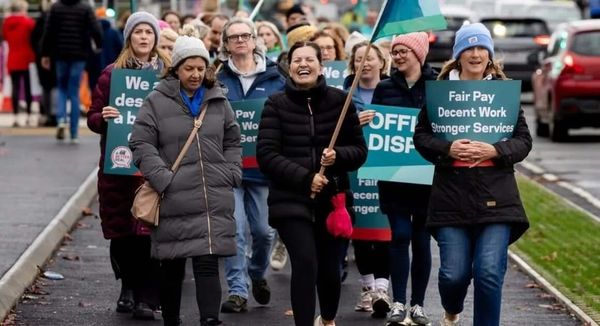
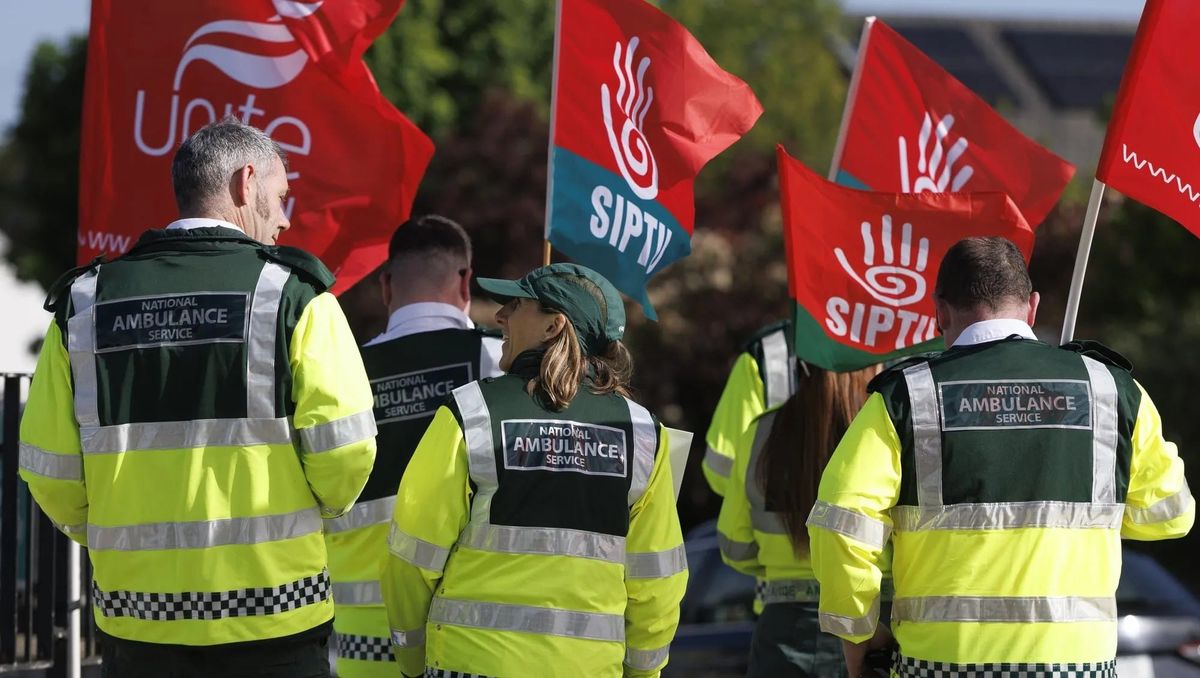
- Build the picket lines – the pickets need to be big on 14 & 21 October, making sure as many members as possible come on to the pickets, are active in supporting the strike. This means putting an argument to your co-workers to support the pickets.
- Visit the picket lines – if you are not on strike you can still show your solidarity by visiting a picket line, talking to those on strike about the dispute and what the next steps are. There will be hundreds of picket lines across the country.
- Organise a workplace strike committee – we need to start organising for after the one day strikes. The government are looking aloof and intransigent, so we have to plan on escalating the action. This will require local organising of strike committees based on the workplace – so where there are many unions (e.g. in schools, hospitals, universities) all unions come together and develop plans to escalate, joint action.
- Prepare to escalate the action – the quickest way to bring an industrial dispute to a head is indefinite strike action. We saw that with the school secretaries and caretakers strike. We need to avoid a series of one-day strikes that end up having diminishing impact and will only demoralise union members.